September 7, 2026 Post by : Editorial Small Spaces
The Emotional Side of Letting Go: Why Decluttering Feels So Hard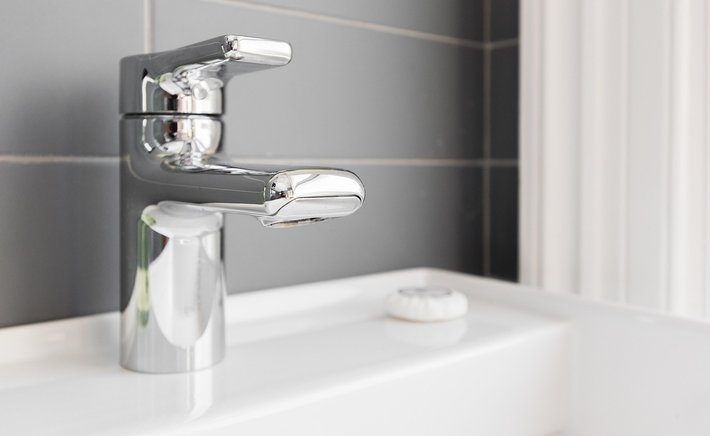
Bathrooms are small, but they attract stuff at a surprising rate. Half-used bottles, hotel toiletries, samples, products bought for a phase you've since moved past. Before long, the cabinet is packed, the counter is crowded, and you can't find the one thing you actually use every day. The bathroom is a perfect place to practice minimalism, because the space is limited and the stakes are low.
A calmer bathroom starts with an honest look at what's really in there. Most of us have far more than we need, and much of it is expired, duplicated, or forgotten.
Empty It Completely
The fastest way to understand your bathroom is to take everything out. Every bottle, jar, tool, and towel. Put it all on a table or the floor, and look at it. It's usually more than you expected. This moment of surprise is useful. It breaks the autopilot that lets clutter accumulate unnoticed.
Now sort into three groups: daily use, occasional use, and everything else. Daily use is what you touch every morning and night. Occasional use is things like first aid supplies, extra razors, or a hair treatment you use monthly. Everything else is the question mark pile.
Go through the question mark pile with a few simple tests. Is it expired? Toss it. Is it a duplicate of something you already have open? Use up the open one first. Did you buy it more than a year ago and never finish it? It's not working for you. Let it go. Be honest about the products you keep buying and never using. They're clutter with a purchase history.
The daily-use items should be the only things on your counter or in your shower. Everything else lives in a cabinet or drawer. A bare counter isn't about aesthetics for their own sake. It's easier to clean, easier to use, and calmer to look at first thing in the morning.
Simplify Your Storage and Routine
Once you've edited, give what remains a clear home. A small caddy for shower items, a drawer divider for tools, a single basket for towels. You don't need matching containers or a label maker. You need a place for everything, and everything in its place.
Consider whether your routine itself can be simplified. Many people use fewer products than they own. If you've settled on one shampoo, one soap, and one moisturizer, you don't need backups of five alternatives. Buy what you use, use what you buy, and let the shelf stay mostly empty.
Restock deliberately. When something runs out, add it to a list and buy it when you're already shopping. Impulse purchases in the beauty aisle are a major source of bathroom clutter, and a list is a simple guard against them.
A minimalist bathroom isn't about deprivation. It's about having exactly what you need, visible and ready, with nothing extra competing for space. The result is a room that feels clean even when it's not spotless, and a morning routine that starts with calm instead of clutter.

Author

22 feb,2025
This incident opened my eyes to the value of Insurance in general, so I decided to examine my personal and business insurance.



Comment (3)
The payments are made directly from one person to another without passing through a central bank or clearing house.
22 feb,2025
ReplyThe Minimalist Bathroom: Small Changes That Make a Big Difference
23 feb,2025
ReplyThe One-In-One-Out Rule: The Simplest Way to Stop Clutter From Creeping Back
23 feb,2025
Reply